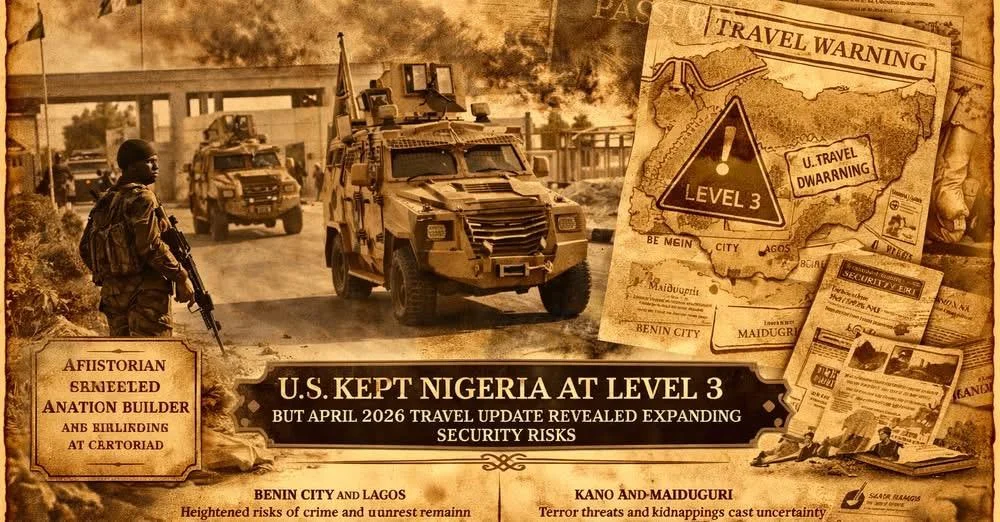
U.S. Kept Nigeria at Level 3, but April 2026 Travel Update Revealed Expanding Security Risks
The United States did not raise Nigeria’s travel level in April 2026, but the changes were still serious. More states were declared too dangerous for travel, embassy staff were reduced in Abuja, and the latest advisory revealed how deeply insecurity was affecting the country’s global standing.
From the US Department Of State:
There were no changes to the Travel Advisory Level or risk indicators. The advisory summary was updated to reflect changes to U.S. embassy operations. Do not travel to Plateau, Jigawa, Kwara, Niger, Taraba states were added.
Reconsider travel to Nigeria due to crime, terrorism, unrest, kidnapping, and inconsistent availability of health care services. Some areas have increased risk.
Do Not Travel to:
Borno, Jigawa, Kogi, Kwara, Niger, Plateau, Taraba, Yobe, northern Adamawa states due to terrorism, crime, and kidnapping
Bauchi, Gombe, Kaduna, Kano, Katsina, Sokoto, and Zamfara states due to unrest, crime, and kidnapping
Abia, Anambra, Bayelsa, Delta, Enugu, Imo, and Rivers states (with the exception of Port Harcourt) due to crime, kidnapping, and unrest.
Advisory summary:
On April 8, 2026, the Department of State authorized non-emergency U.S. government employees and U.S. government employee family members to leave U.S. Embassy Abuja due to the deteriorating security situation.
Crime and Kidnapping
Violent crime is common throughout Nigeria. This includes armed robbery, assault, carjacking, kidnapping, hostage-taking, roadside banditry, and rape.
Kidnappings for ransom happen often.
They primarily target dual national citizens visiting Nigeria.
Americans are perceived as wealthy and are often targets of crime and kidnapping.
Kidnapping gangs have stopped drivers on interstate roads in order to rob and kidnap victims.
Terrorism
There is risk of terrorist violence, including terrorist attacks and other activity in Nigeria. Terrorists continue plotting and carrying out attacks in Nigeria. Terrorists collaborate with local gangs to expand their reach. They may attack with little or no warning, including:
Shopping centers and malls
Markets
Hotels
Places of worship
Restaurants and bars
Schools
Government buildings
Transportation hubs
Public places where crowds gather
Unrest
Civil unrest and armed gangs are active in parts of Southern Nigeria. This is especially true in the Niger Delta and Southeast regions. Armed crime and gangs are common in the area. Crimes include kidnapping and assaults on Nigerian security services. Violence can occur between communities of farmers and herders in rural areas.
Unreliable health care
Americans should not expect the same level of health care to be available in Nigeria as they do in the United States:
Nigerian medical facilities are generally not equipped to U.S. or European standards.
Many medicines are not available. This includes common medications for diabetes or asthma.
Bring enough over the counter and prescription medicines to last your entire stay in Nigeria.
Make sure all your vaccinations are up to date. Consider getting boosters for yellow fever, meningitis, typhoid, cholera, hepatitis A, hepatitis B, and polio.
All visitors should take Malaria prophylaxis. Nigeria is high risk for Malaria.
Counterfeit pharmaceuticals are a common problem.
Hospitals often expect immediate cash payment for health services.
Most hospitals and doctors do not accept U.S. health insurance.
Emergency services like those in the United States or Europe do not exist.
Blood supply is often unreliable.
Ambulance services are unreliable, have poor equipment, and often do not have trained paramedics.
We strongly recommend getting traveler’s insurance, including medical evacuation insurance, before traveling.
The Department of State does not pay medical bills for Americans overseas.
The U.S. government cannot offer emergency services to Americans in many areas of Nigeria due to the safety risks.
Risks in specific areas -Level 4 - Do Not Travel
Borno, Yobe, Kogi, and Northern Adamawa states
Do not travel to Borno, Jigawa, Kogi, Kwara, Niger, Plateau, Taraba, Yobe, and northern Adamawa states due to terrorism, crime, and kidnapping.
Do not travel to these areas for any reason.
The security situation in these states is unstable and uncertain. This is because of widespread terrorist activity, violence between communities, and kidnapping.
Security operations to counter these threats may occur without warning.
Terrorist groups in the Northeast often target:
Humanitarian camps
Security forces
Churches and mosques
Schools
Government buildings
Entertainment venues
Road travelers
Violence in Northeast Nigeria has forced about 2 million Nigerians to leave their homes.
Bauchi, Gombe, Kaduna, Kano, Katsina, Sokoto and Zamfara states
Do not travel to Bauchi, Gombe, Kaduna, Kano, Katsina, Sokoto, and Zamfara states due to unrest, crime, and kidnapping.
Do not travel to these areas for any reason.
The security situation in these states is unstable and uncertain due to civil unrest.
Widespread violence between communities and armed crime, including kidnapping and roadside banditry.
Security operations to counter these threats may occur without warning.
Abia, Anambra, Bayelsa, Delta, Enugu, Imo, and Rivers states (with the exception of Port Harcourt)
Do not travel to Abia, Anambra, Bayelsa, Delta, Enugu, Imo, and Rivers states (with the exception of Port Harcourt) due to crime, kidnapping, and unrest.
Do not travel to these areas for any reason.
Crime is widespread in Southern Nigeria.
There is a high risk of kidnapping, violent protests, and armed gangs.
If you decide to travel to Nigeria:
Enroll in the Smart Traveler Enrollment Program (STEP) to get important updates and alerts from the U.S. embassy or consulate. Enrolling helps the U.S. embassy or consulate contact you or your emergency contact in an emergency.
Review the Country Security Report for Nigeria.
Carry proper identification, including a U.S. passport with a current Nigerian visa, if needed.
Use caution when walking or driving.
Keep a low profile.
Review travel routes and times. Vary your predictability.
Do not physically resist any robbery attempt.
Be extra vigilant when visiting banks or ATMs.
Check local media for breaking events and be prepared to adjust your plans.
Be aware of your surroundings.
Stay alert in locations frequented by foreign tourists.
Avoid demonstrations and large political gatherings.
Review your personal security plans.
Have evacuation plans that do not depend on U.S. government help.
Establish a “proof of life” protocol with your loved ones, so that if you are taken hostage, your loved ones know specific questions (and answers) to ask the hostage-takers to be sure that you are alive. This helps to rule out scams.
Prepare a backup plan for emergency situations.
Visit the Centers for Disease Control and Prevention (CDC) website for the latest Travel Health Information for Nigeria.
Get comprehensive medical insurance that includes medical evacuation.
We highly recommend that you buy travel insurance before you travel. Check with your travel insurance provider about evacuation assistance, medical insurance, and trip cancelation coverage.
Whether you’re a first time or frequent traveler, use the International Travel Checklist.
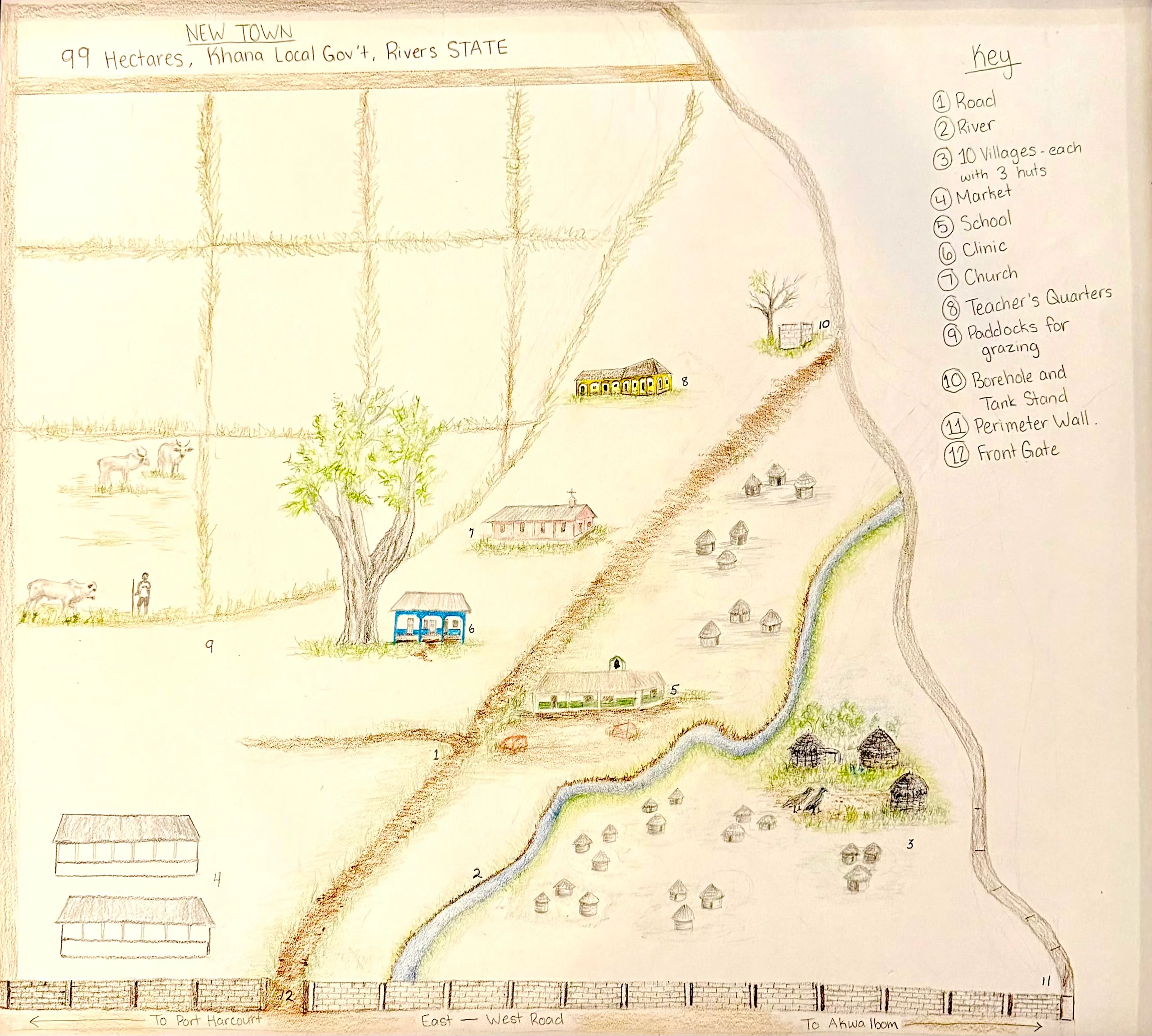
Port Harcourt THIS WEEK??
Not YET! Maybe NEXT WEEK??
We have yet to start work on our next BIG project in Port Harcourt. We have had one delay after another, with no movement, for MONTHS! Please pray for the Lord's favor over this project, and for His timing. Pray for the hearts of the locals, who DO NOT want our peaceful Fulani friends to move into their neighborhood.
From Missionary Phyllis, 3/13/26: Our meeting with the DSS plus many chiefs from the Sogho community lasted 3 1/2 hours. Nothing was resolved. We're all going to the site on Thursday morning, with the original surveyor, to confirm the boundaries. The DSS Director promised a resolution by the end of the week. So... we thank and trust God to bring this strange episode to a successful end!! I'll keep you posted! Phyllis
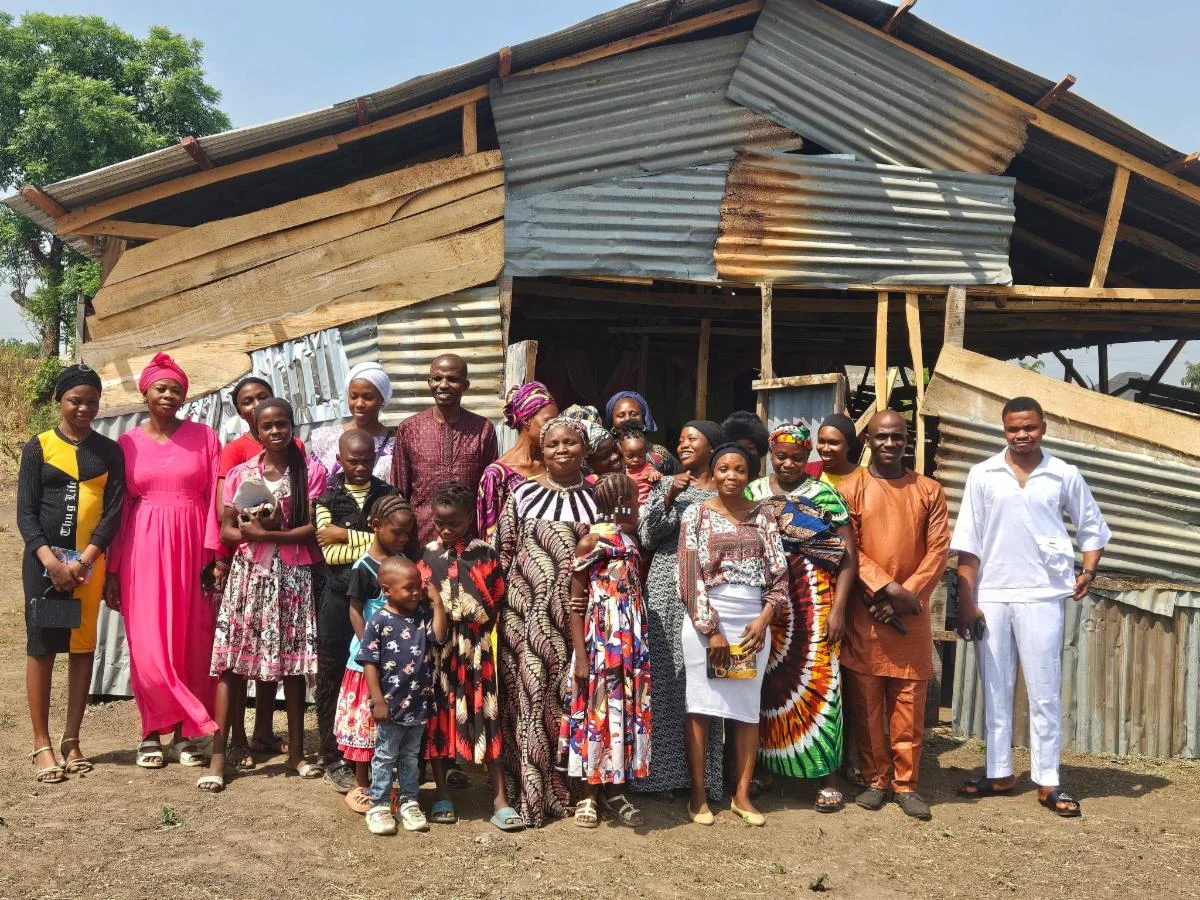
House Of Mercy Free Methodist Church
We are still raising funds to build a solid church building for these faithful Christ followers. Schools For Africa Assistant Director Reverend John Raji is overseeing this special project. The church owns the land, so the structure built here will forever stand as a house of worship! If you are able to give for this build, click the GIVE button below, and don't forget to earmark your donation as CHURCH! Thank you to the several folks who have already given!
Please Pray for *Obed!
We have a chief who wants to come to Jesus, we're calling him *Obed. He has been quietly asking questions, and has been given resources! Over time, he has become afraid to say more. There is SUCH terrible persecution for Muslim Nigerians who want to come to Christ...
IF this man comes to Christ, he will bring his whole HUGE family to Christ as well. He will bring his whole village to Christ. We will hold church services in his school for the surrounding community!
Lord Jesus, you know the man I speak of. You know his heart. Please continue to pursue him. Help him find a way to give his heart to you! Give him courage, and protect him and his family from persecution. Oh LORD, how we want them in our family!